Showing posts with label nuclear. Show all posts

Tuesday, April 5, 2011

Why trees are like nuclear power plants

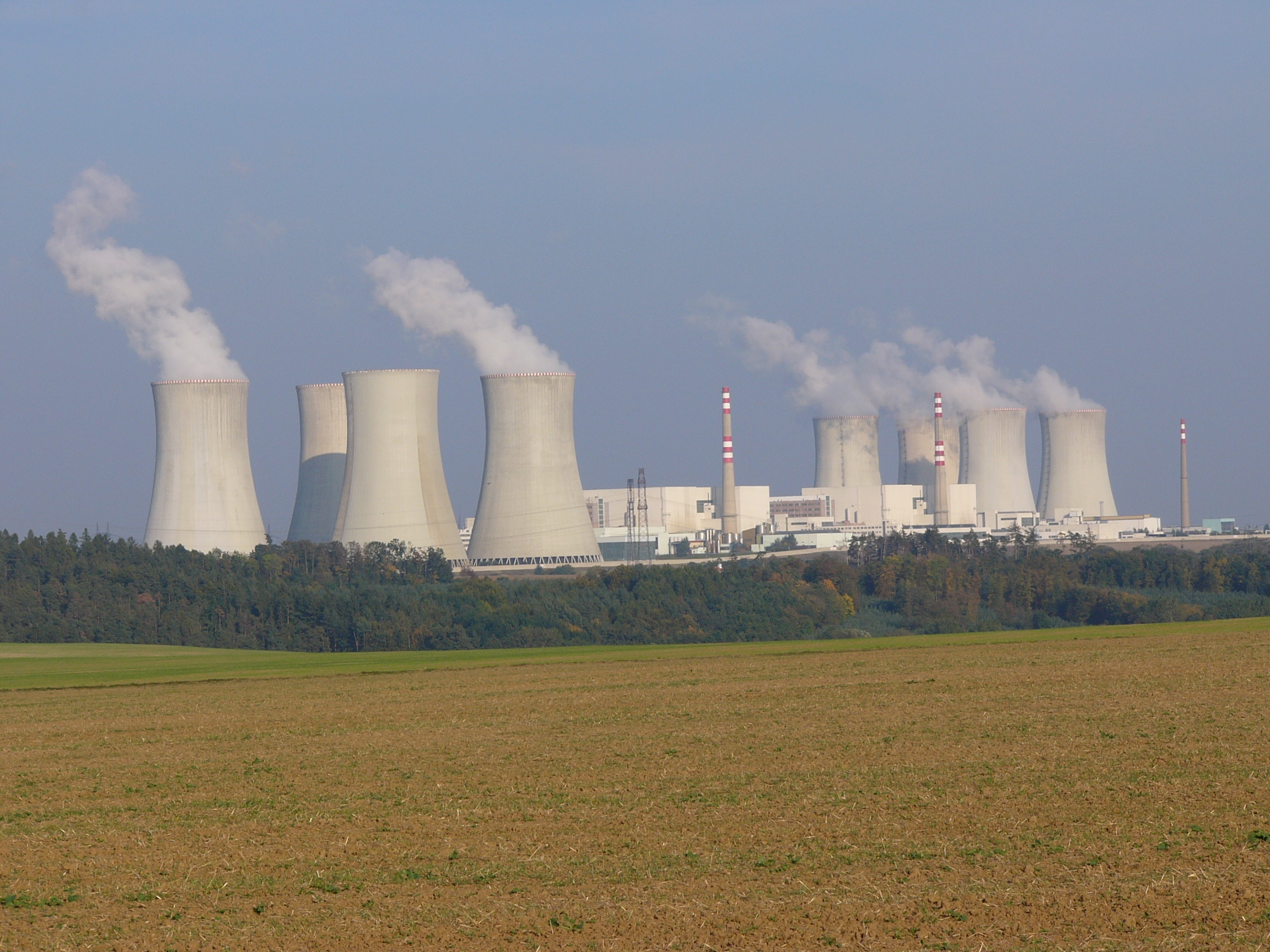
Now, at first glance, most of you would instantly conclude that trees are nothing like nuclear power plants at all. And, at least physically, I suppose that's true. I mean, this:


Looks nothing like this:


But let us look deeper than the mere surface of the issue, as opposed to that organisation known as Greenpeace.

What do trees do? They undergo photosynthesis, which involves taking up carbon dioxide and water, and producing glucose and oxygen as a byproduct.
Similarily, nuclear power plants utilise a chain reaction of nuclear fission to produce electricity, with water vapour and small amounts of radioactive waste as a byproduct.

Nuclear power plants sometimes undergo potentially catastrophic events, such as the nuclear meltdown at Chernobyl, or the recent events in Fukushima. Sometimes, people die just from the construction of a nuclear power plant, in industrial accients or the like.
Similarily, trees are also a catalyst for disaster. All major bushfires involve trees as the primary fuel source, a fuel source that leads to the destruction of countless homes and properties, and the deaths of animals and people. Think of all the carbon dioxide released into the atmosphere during such an event. And sometimes, a tree will drop a branch onto a car or a person for apparently no reason at all.

There are those that would claim that because nuclear power plants are man-made, and trees are natural, then that makes trees different.
Oh, I'm sorry. I was not aware that we, as human beings, are not natural. We are animals just as any other species on this planet today. We are part of the natural world. And hence, what we do is also natural. If a vulture uses a rock to break open an ostrich egg, does that make the vulture and the rock unnatural? If a monkey uses a stick to catch ants to eat, does that make the monkey and the stick unnatural? No. So then why are humans and human tools labelled as "not natural" simply because we made them? Is this not bias? Is this not speciesism?

Nuclear power plants are like trees. Trees are like nuclear power plants.

Sunday, March 27, 2011

Nuclear debate

With the recent events in Fukushima, Japan, the nuclear energy debate has been fervently reignited.

Here's just a selection of online articles from my browsing, each one of which I support completely.

'Climate may demand some nuclear power' - Tim Soutphommasane
http://www.theaustralian.com.au/news/opinion/climate-may-demand-some-nuclear-power/story-e6frg6zo-1226027949878

"I am inclined to believe nuclear power should be part of the global energy mix. Of Fukushima, let's not forget it took a 9.0-magnitude earthquake and a 14m tsunami to trigger this crisis."

"If we are to repudiate nuclear power, it's not enough just to point to dangers. It must be shown that its costs clearly outweigh its benefits.

There's one obvious benefit that opponents of nuclear typically downplay; namely, nuclear power plants are carbon-free (in their generation of electricity). If we are interested in mitigating global warming, this should carry some moral weight."


'Japan crisis 'teaches Aussies value of nuclear energy'' - Ziggy Switkowski
http://www.adelaidenow.com.au/news/japan-crisis-teaches-much-about-value-of-nuclear/story-fn7kiea5-1226027840519

"The plants were designed for a magnitude 8 earthquake but were staggered by an earthquake 10 times stronger, with its epicentre just offshore and with 40,000 times the energy of the atomic bomb which devastated Hiroshima, according to a Cosmos Online editorial.

That the plant remains largely intact is extraordinary given most structures in that area are severely damaged.

The earthquake and tsunami cracked dams, exploded oil storages, ignited coal and gas-fired power stations and killed many people.

But at this point, there is no report of a nuclear-related fatality nor any case of radiation sickness from exposure to elevated radioactivity."


'How nuclear passed its toughest test' - Miranda Devine
http://www.dailytelegraph.com.au/news/opinion/how-nuclear-passed-its-toughest-test/story-e6frezz0-1226026963030

"The Japanese nuclear power complex is like a Tonka Truck. It's so tough that you can put it through a magnitude 9 earthquake and a 14m tsunami and it's still standing, with no armageddon in sight."

"But when you think about it, Fukushima shows how resilient even a 40-year-old, inadequately maintained nuclear plant can be.

And, in the scheme of things, with more than 20,000 people dead in the rest of Japan and a massive rebuilding operation still to come, what are a few millisieverts of radiation between friends?"

"As the only form of baseload energy with virtually zero carbon emissions, nuclear is the only solution for those, like the Prime Minister, who claim a "low-carbon" world is necessary to prevent climate catastrophe. (Well, there is one other solution, which BlueScope Steel chairman Graham Kraehe suggested sarcastically this week while criticising Gillard's carbon tax at the National Press Club. We could stop exporting coal and wreck our economy.)

The truth is, greens who oppose nuclear energy don't really care about carbon dioxide emissions or global warming. They know the hype is just a means to an end.

They want us to reduce our consumption of power and change our way of life. They want to stall progress, and have everyone live like Wombles."


And best of all...
'Propaganda has no place in crisis' - Geoffrey Barker and Paul Dibb
http://www.theaustralian.com.au/national-affairs/commentary/propaganda-has-no-place-in-crisis/story-e6frgd0x-1226026345696

"As Japanese authorities struggle to contain potentially grave radiation leakages from the damaged Fukushima reactors, conservation and green ideologues have rushed to claim the catastrophe shows there is no future for nuclear power.

Australian Conservation Foundation spokesman David Noonan says nuclear power has no place in a sustainable energy future; Greens leader Bob Brown says the Japanese crisis is a reminder that nuclear energy is outside the limits of human safeguards. These sorts of statements, echoed by activists globally, are at once false and heartless."

"But generalised arguments against nuclear power are separate, irrelevant and inappropriate issues at this time of appalling devastation and human suffering wrought by the earthquake and tsunami. With a probable death toll of many tens of thousands, and widespread destruction of homes and economic infrastructure on the north coast, Japan is facing challenges quite reasonably claimed by Japanese Prime Minister Naoto Kan as the country's greatest challenge since the end of World War II."

"Sterile ideological arguments over the future of nuclear power should be for another day. It verges on the indecent for anti-nuclear activists to propagandise when perhaps millions of Japanese are traumatised by bereavement, hunger, homelessness, joblessness, fear and cold."

"So let us not be distracted by Green obsessions about nuclear power. Japan's long-term welfare and recovery is too important to be held hostage to such comparatively irrelevant side issues."

Saturday, March 19, 2011

Japan explains nuclear problem to Japanese kids

Followers